



Six hours in a metal tube at 35,000 feet. The air is dry, the cabin pressure is lower than sea level, and your legs are trapped in a seat that was not designed for human comfort. By the time you land, your feet feel like balloons and your legs look like they belong to someone else.
Sound familiar?
This is not about medical risks. This is about how your legs feel before, during, and after a long flight, and what you can do about it.
When you sit for hours with your knees bent, blood tends to pool in your lower legs. The cabin pressure makes it harder for your circulatory system to do its job. The air is so dry you could swear you have lost five pounds in water weight. And unless you are in business class, your seat does not exactly encourage movement.
The result is predictable: swollen ankles, heavy legs, and that tight feeling when you try to put your shoes back on at baggage claim. For a short flight, it is a minor annoyance. For a long-haul journey of six hours or more, it can ruin the first day of your trip.
What actually helps on a long flight
Bamboo fibre does something cotton cannot: it draws moisture away from your skin and releases it into the air. On a seven-hour flight, that means the difference between arriving with damp, clammy feet and arriving with feet that still feel reasonably fresh. Bamboo also breathes better than cotton, which helps when cabin temperature swings from freezing at takeoff to surprisingly warm at hour five.
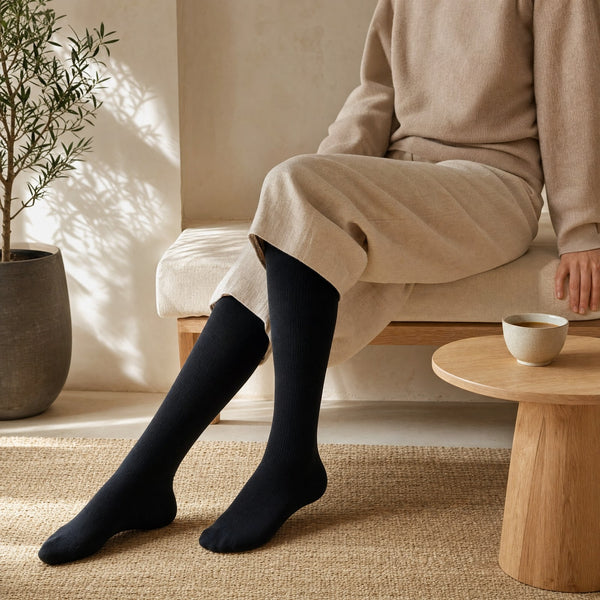
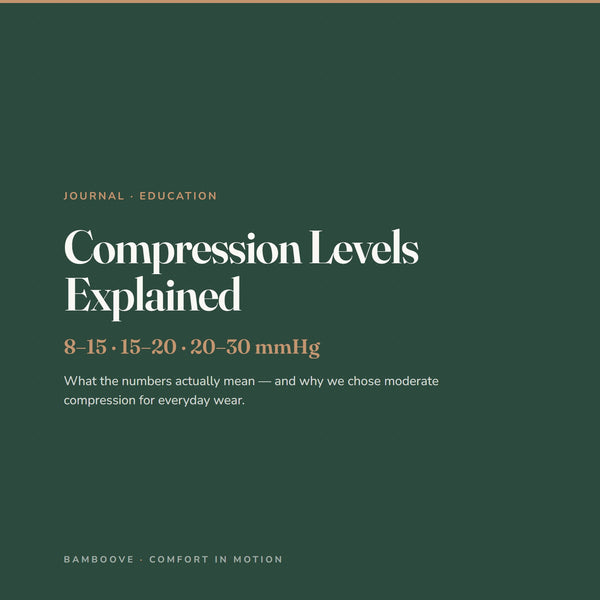
Compression helps your blood move. You do not need the firm medical-grade kind. Our Classic knee-high uses 15-20 mmHg graduated compression, firm at the ankle and easing up the calf, which is exactly the part of your leg that needs support when you have been sitting still for hours. Knee-high matters here: the compression has to reach up the calf to help blood travel back toward your heart.
The cuff matters. Avoid socks with tight elastic bands that dig into your calves. Look for a gentle, wide cuff that holds without restricting. It sounds like a small detail, but after eight hours, you will notice the difference.
What experienced travellers do
Put your compression socks on before you leave for the airport. Yes, before. Your legs will thank you before you even board.
Stay hydrated. The dry cabin air dehydrates you faster than you think, and dehydration makes swelling worse. Water is your friend. Alcohol is not.
Bring a spare pair. Changing into fresh socks halfway through a long flight can refresh your circulation more than you would expect.
Wear loose shoes to the airport. Your feet may swell during the flight, and tight shoes will punish you for it.
For flight comfort, we recommend our Classic knee-high. It has 45% bamboo fibre for softness, 15-20 mmHg graduated compression that is firm at the ankle and eases up the calf, and a knee-high fit that delivers consistent support throughout your leg. It is compact enough to pack as a spare in your carry-on.
The Classic knee-high was designed with travel in mind, not as a medical product, but as a better sock for people who spend hours in cramped spaces.
If you have a long flight coming up, do not wait until you land to think about your legs. Pack the right socks. Your legs will arrive feeling fresher, and you will be ready to enjoy your trip from day one.
This article is about comfort, not medical advice. If you have circulatory concerns, please consult a healthcare professional before travelling.